
THE SHEPHERD'S CALENDAR; WITH VILLAGE STORIES, AND OTHER POEMS
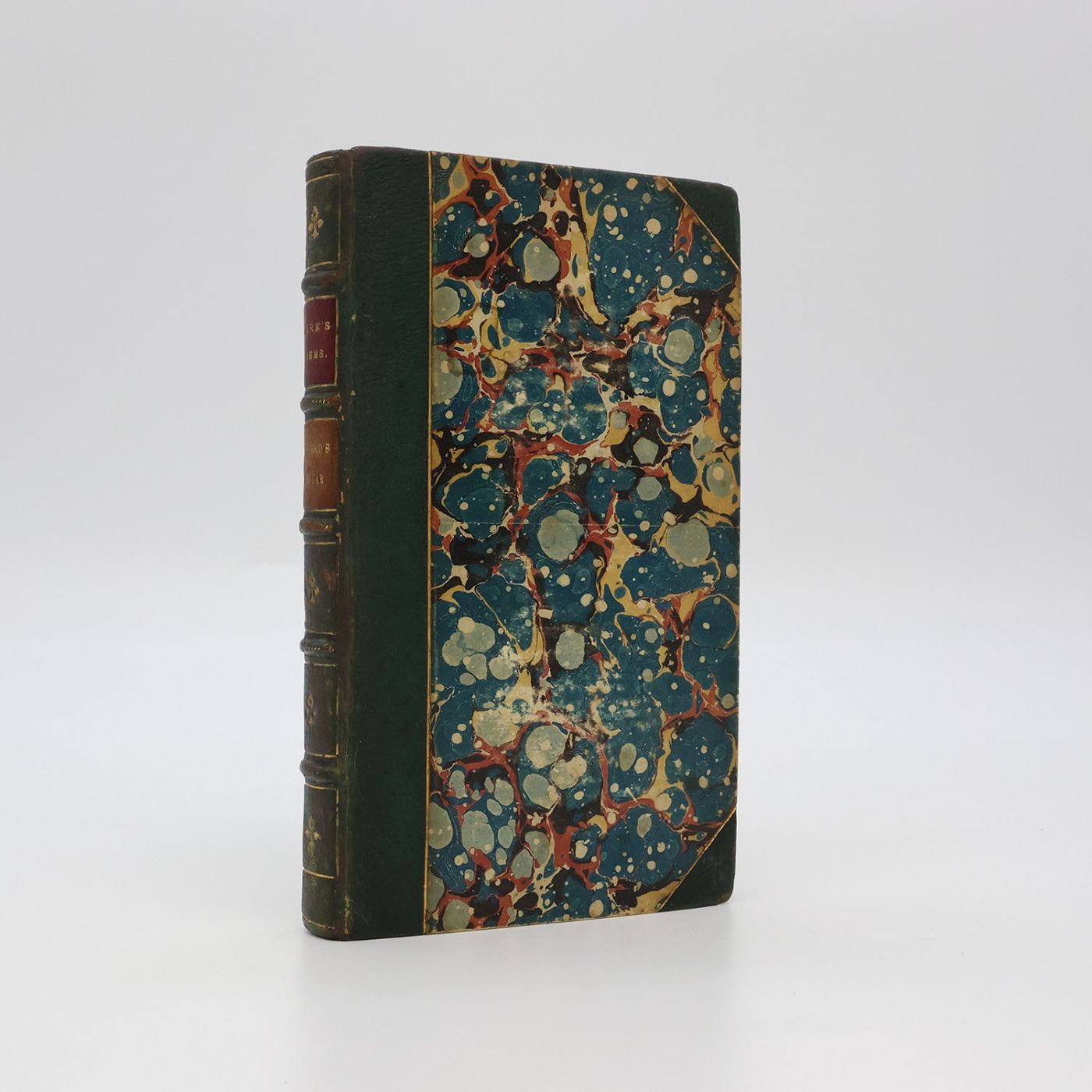
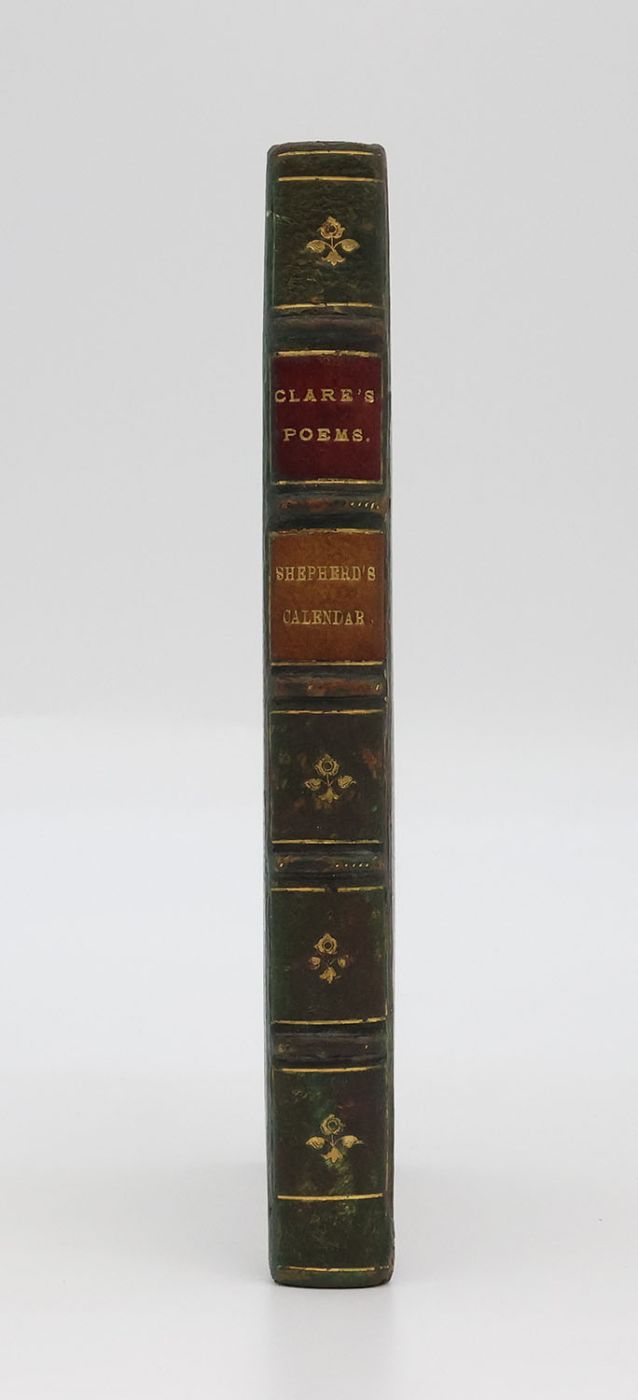
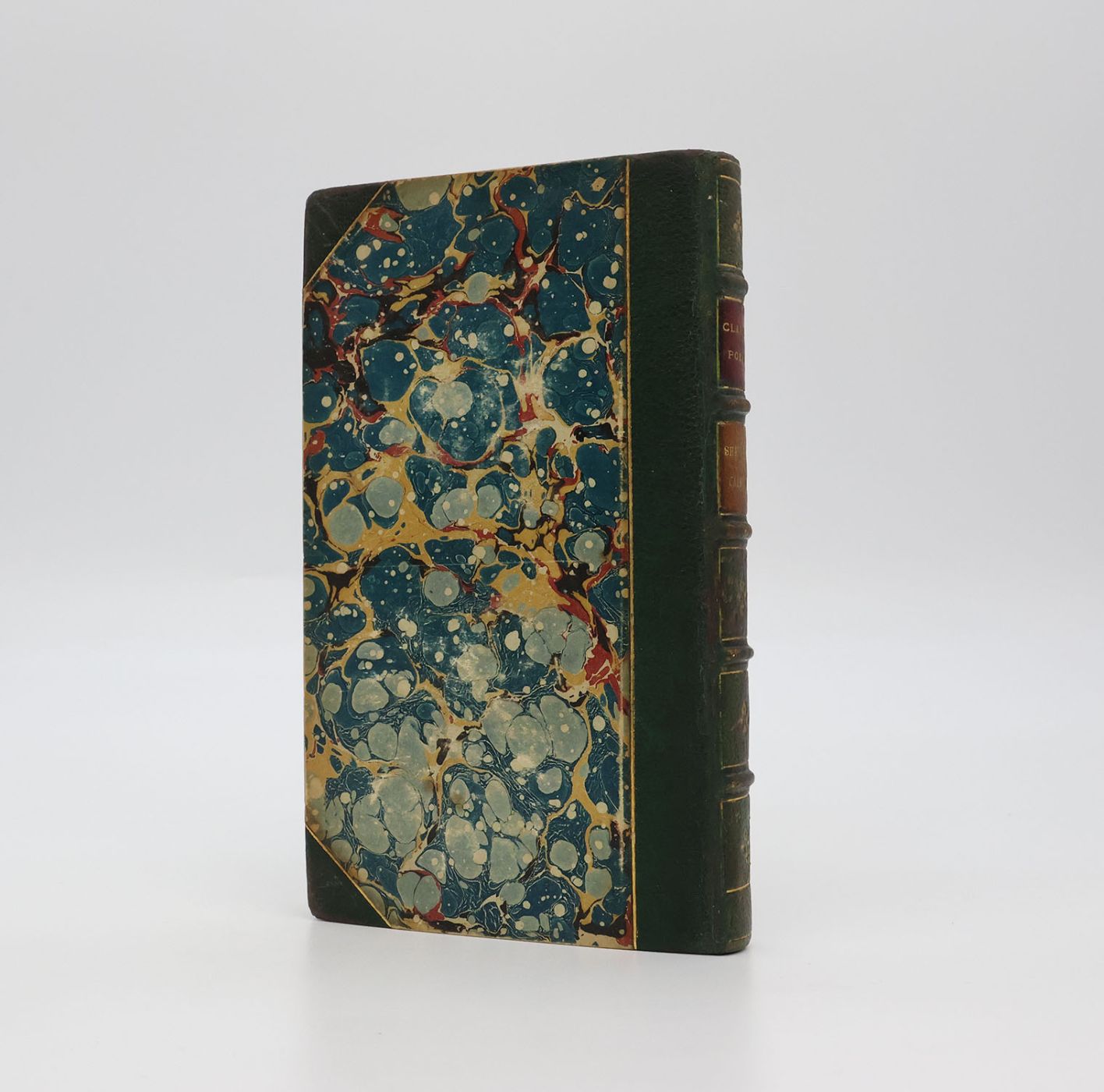
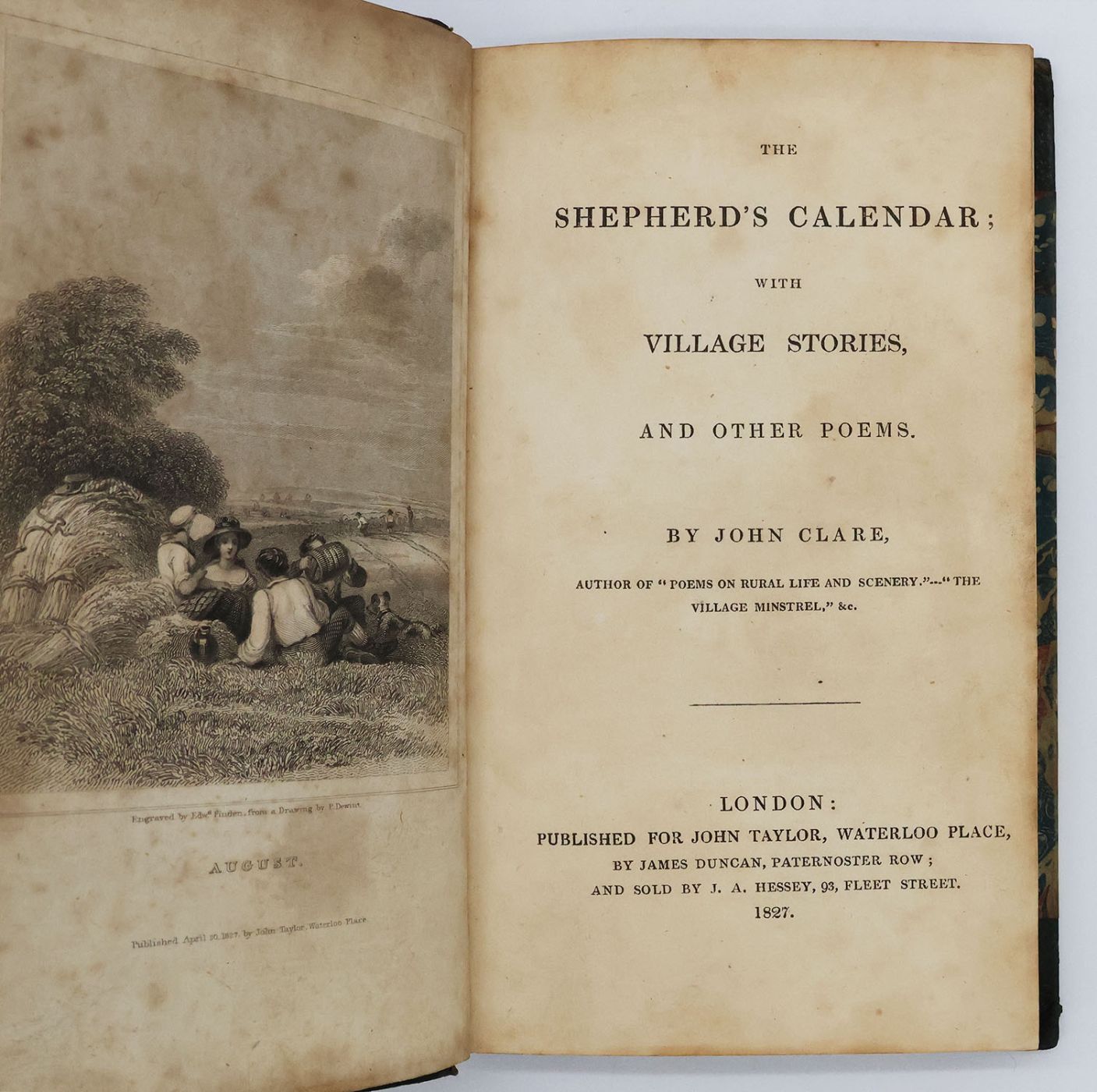
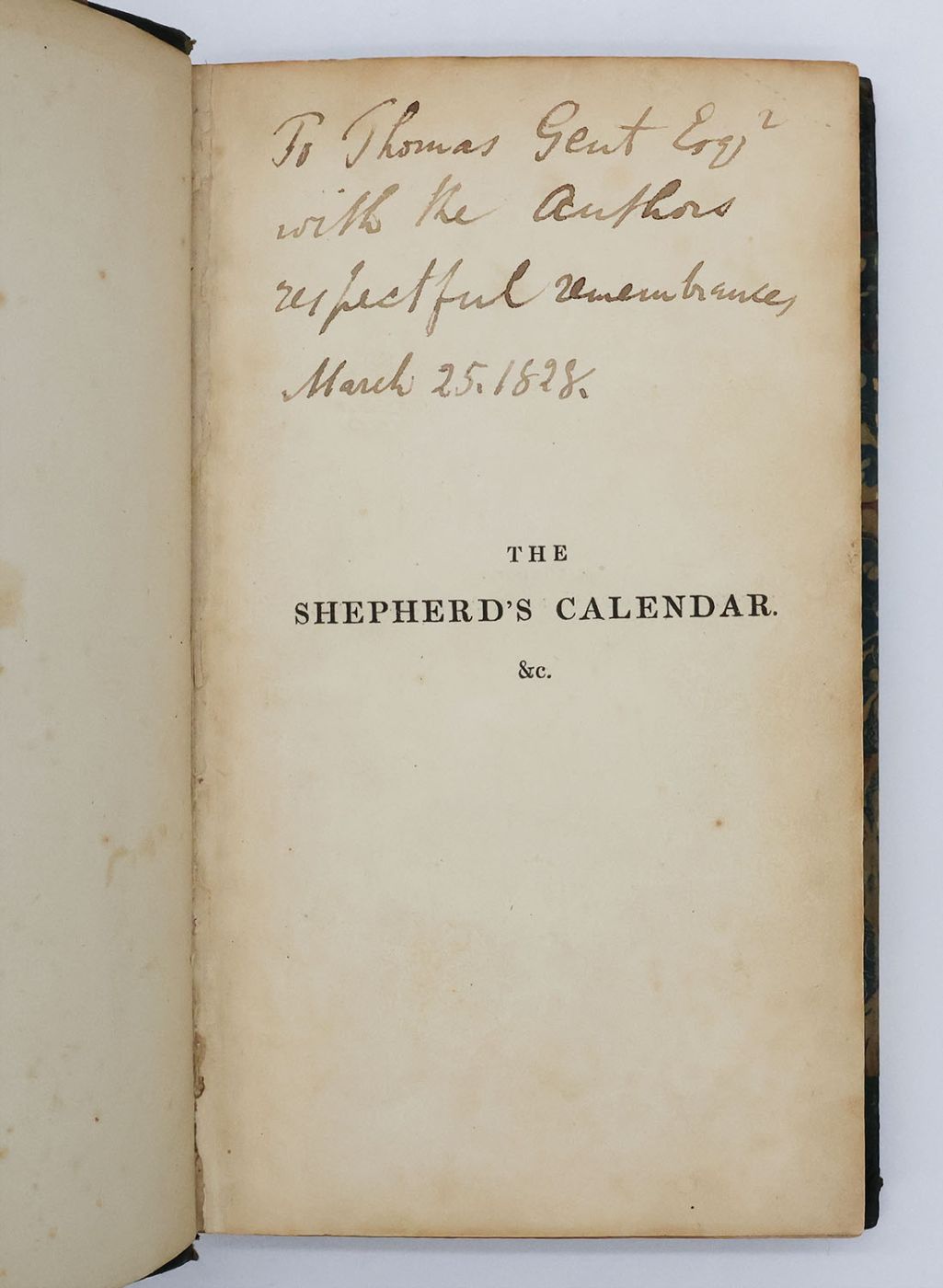
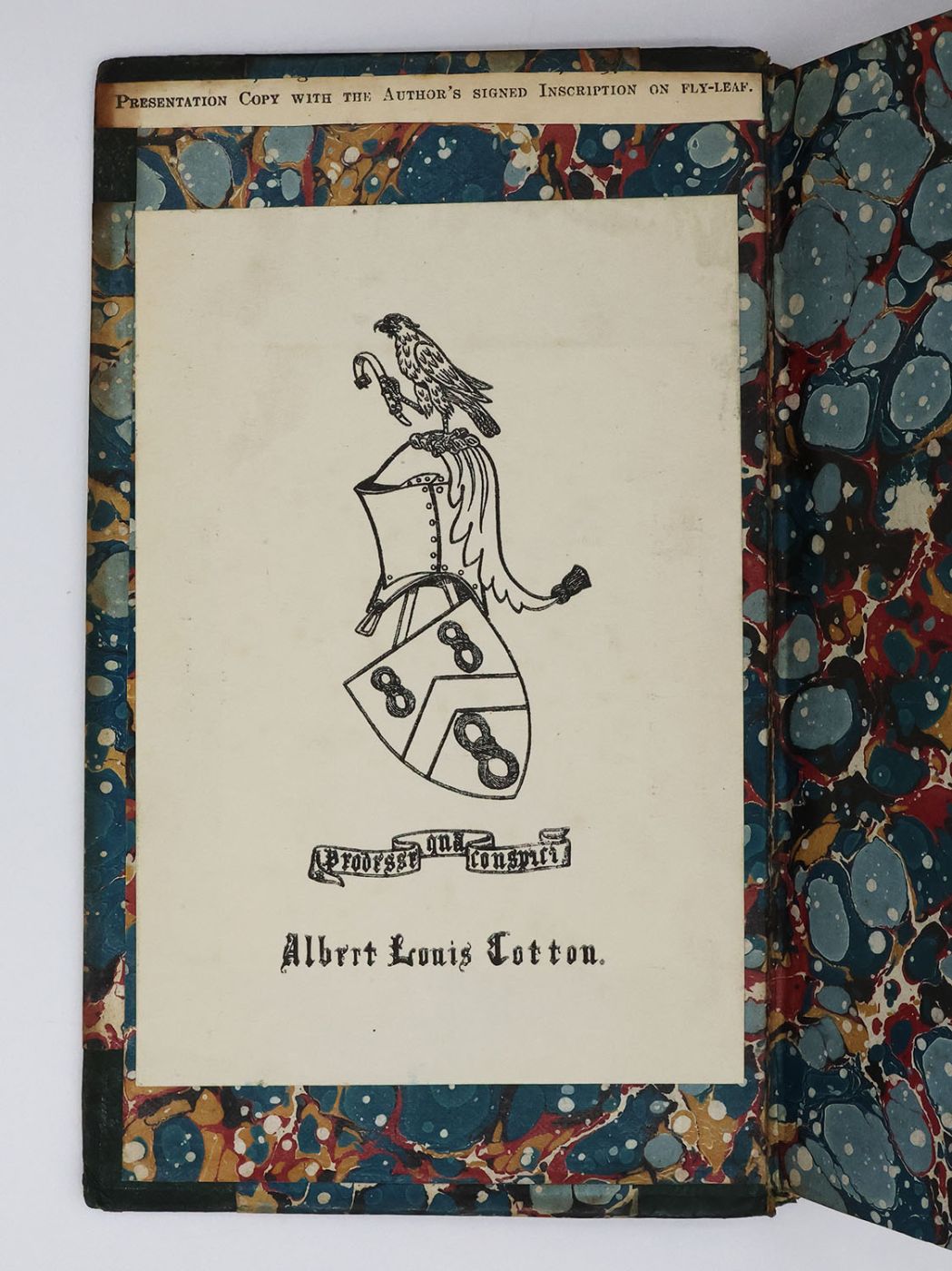
First edition, first printing. Signed by the author. Inscribed presentation copy from John Clare to fellow poet Thomas Gent. Contemporary half green morocco and gilt ruled, marbled paper covered boards. The spine with five raised bands, compartments ruled and decorated with a gilt floral centrepiece, and titles in gilt on red and orange morocco labels. All edges marbled. Half title. Marbled endpapers. Engraved frontispiece by Edward Finden after a drawing by P. Dewint. A very good copy, the binding firm with some rubbing to the raised bands and corners. With the bookplate of Albert Louis Cotton, and a thin strip of catalogue entry tipped in to the front pastedown. The contents, with some toning and spotting to the prelims, are otherwise clean throughout.
Inscribed by John Clare in black ink on the half title "To Thomas Gent Esq / with the author's / respectful remembrance / March 25, 1828". A rare presentation copy of Clare's third, and most ambitious collection, described by Tom Paulin as "one of the great poems of the nineteenth century". 'The Shepherd's Calendar' was the last of Clare's works published by John Taylor. His debut volume, 'Poems Descriptive of Rural Life and Scenery' (1820), met with both critical and commercial success, bringing the "Northamptonshire Peasant Poet" a brief spell of celebrity and introductions to figures such as Coleridge, Hazlitt, and Lamb. By the time his second collection, 'The Village Minstrel', appeared later that same year, this fame had already begun to wane. Seven years on, with the publication of The Shepherd's Calendar, after prolonged delay and substantial editorial intervention, it had all but vanished. Sales proved disappointing, only 425 copies were sold within the first two years, and the remaining stock was eventually offered to Clare by his publisher at cost. As Eric Robinson observes, the episode marked 'a timetable of disappointment and defeat', a trajectory that likely contributed to the poet's growing mental instability. Clare underwent a re-evaluation in the 20th century and is now "rightly acknowledged by many to be England's finest nature poet [...] a writer of remarkable imagination and diversity" (ODNB). Provenance: Presented by the author to the poet Thomas Gent, author of 'Poetic Sketches' (1808) and 'Poems (1828); an inscribed copy of the latter was found in Clare's library. He is remembered by Charles MacFarlane as 'Old Tom Gent, boozing Tom Gent, witty Tom Gent, Falstaff Tom Gent, a man who was supposed to have drunk more good wine and to have eaten more good dinners, without ever paying for them, than any individual of his time'; Jeremiah How (publisher), this copy noted in a letter from How to John Taylor (dated 29 March 1856) as being in his possession; Albert Louis Cotton (1874-1936), educated at Balliol College, Oxford, author of 'The Kelmscott Press and the New Printing (1898)'; Sothebys English Literature, History and Children's Books and Illustrations, 10 July 2012, Lot 64. (Bate, Jonathan: John Clare, A Biography (2003); Paulin, Tom: John Clare in Babylon (1992); Heyes, Robert: John Clare and William Hone - A Letter Redated (2014); MacFarlane, Charles: Reminiscences of a Literary Life (1917)).
Stock code: 30004
£9,750
Category
Modern First EditionsSigned / Inscribed
Literature
Poetry
Recent Acquisitions