
THE HOBBIT, Or There and Back Again.
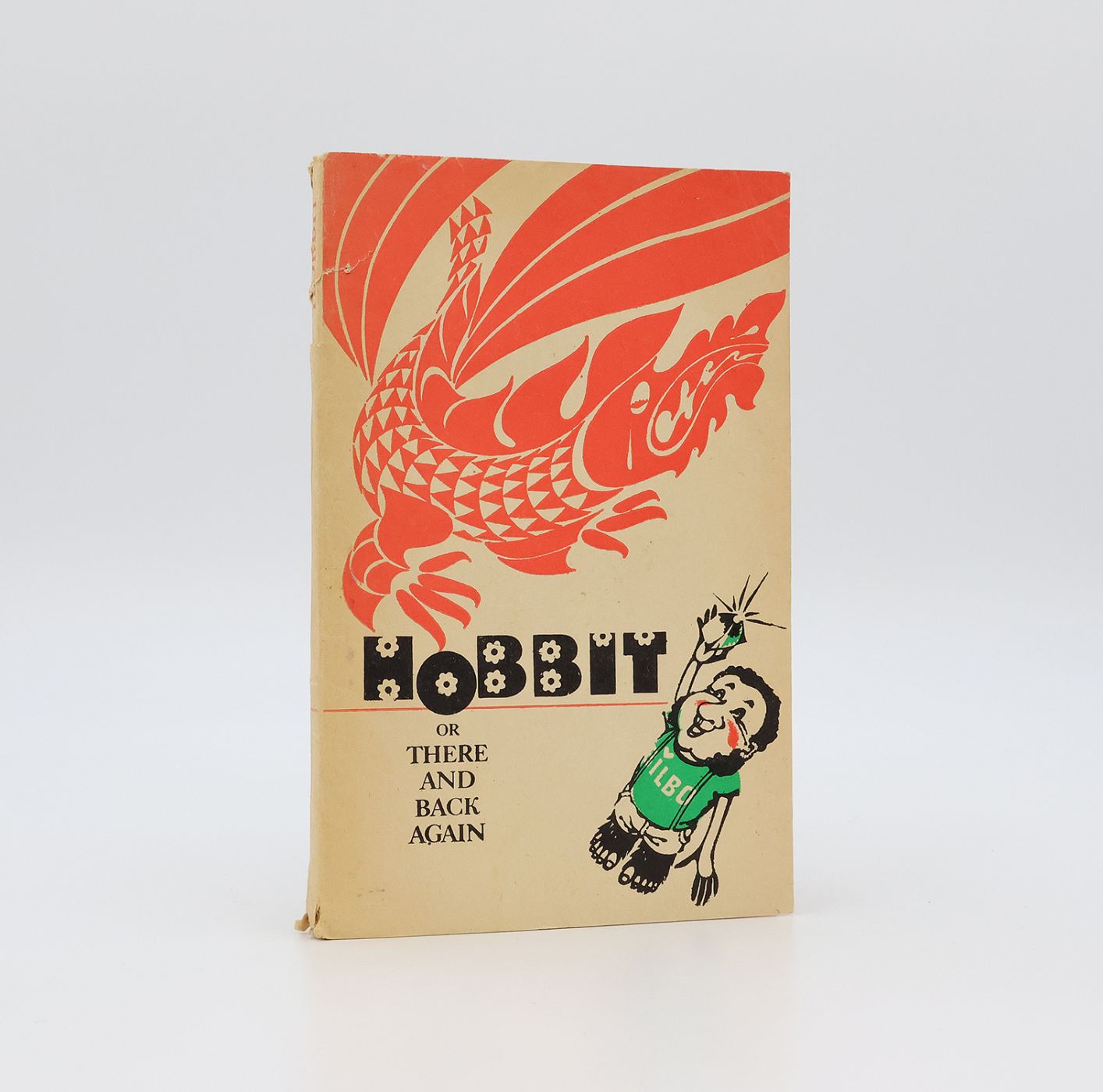
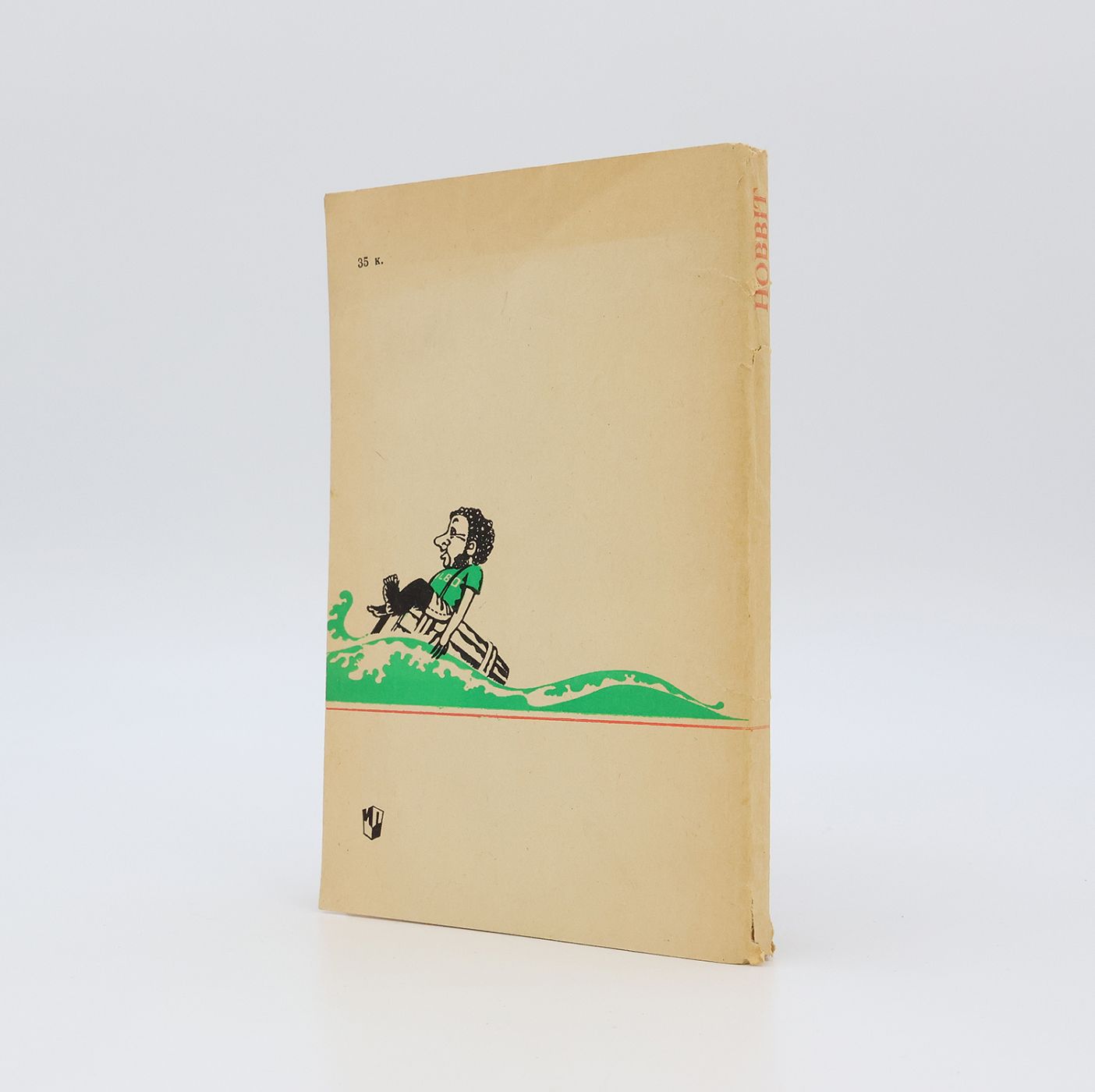
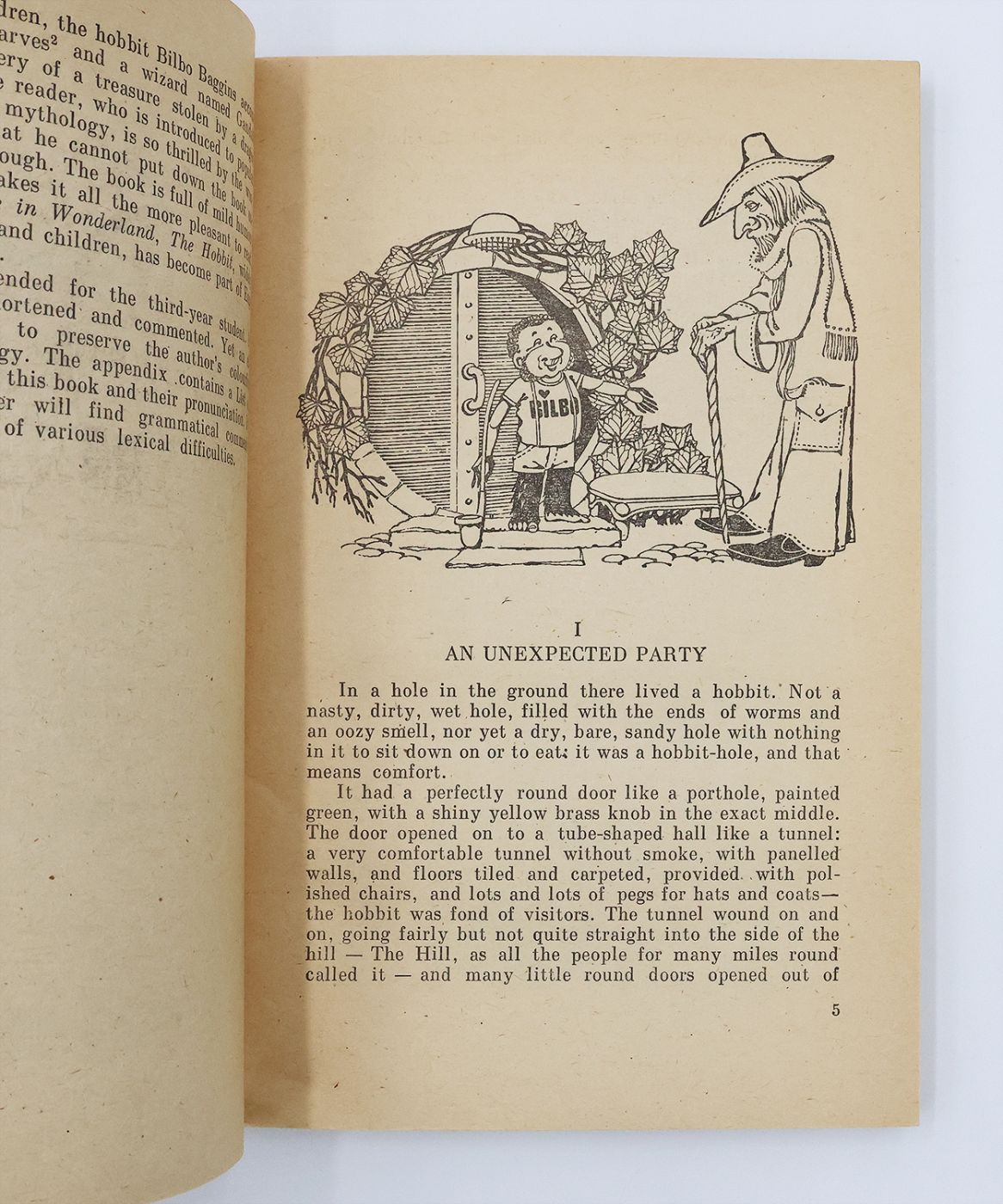
First edition thus. Original card covers, illustrated in black, green and orange. The front panel shows Bilbo holding the Arkenstone below Smaug the dragon, and the rear panel shows Bilbo riding a barrel down the Forest River. With one black and white illustration at the head of the first chapter and a small tailpiece on the final page of the text. A very good copy, the binding square and firm, the wraps lightly rubbed, nicked and creased, with a number of short closed tears to the spine, including the mid-spine. There is a little wear at the gutter of the early pages. The contents are clean throughout and without stamps or inscriptions.
An English language, lightly abridged and annotated Soviet edition of J. R. R. Tolkien's 'The Hobbit', intended for the use of "third year students" specialising in foreign languages at pedagogical institutes. An appendix explains specifically British or archaic words and phrases found in the text. Issued by the Soviet publishing house Prosveshcheniye (Enlightenment), a state-owned publisher of textbooks and educational material first established in the 1930s, which to this day remains the largest Russian publisher of textbooks, with notable links to the Russian government. Interestingly, the cover and internal illustrations strongly emphasise the connection between Tolkien's writing and the hippie movement of the 1960s and 70s. Despite being written by a decidedly English, Catholic Oxford professor, the anti-war sentiments, heavy herb-smoking and respect for nature and simple living found in Tolkien's tales of Middle Earth made them a surprise cult hit with the youth of America's counter-culture. 'The Hobbit' and 'The Lord of the Rings' were read extensively by students, artists and writers, and written about by rock bands such as Led Zeppelin and Pink Floyd. The Bilbo of this edition sports a green t-shirt featuring a heart in place of the dot of the 'i', invoking hippie slogans of peace and love, while the word 'Hobbit' on the front cover and Bilbo's stool in the tailpiece are adorned with characteristic flower-child daisies. The illustration at the head of the first chapter shows Gandalf wearing pointed, cowboy boot-like shoes protruding from robes that fall very much like the bell-bottom jeans famously favoured by hippies. Though it started as an American movement, hippie culture created a global impact that eventually reached even the tightly controlled ideological sphere of the USSR, inspiring anti-authoritarian, pacifistic sentiment in a small but passionate number of people, posing a problem for the Soviet government. The state response was harsh, including the tailing and even arrest of individuals for offences such as sporting long hair and hippie fashions; and the issuing of false protest permits in order to easily arrests groups. Imprisoned hippies were charged on criminal rather than political grounds, so could be housed with violent criminals. Some were institutionalised or dispatched into the army. Some commentators, including the writer Vladermir Wiedemann, suggest that Soviet hippies' perseverance contributed to the eventual fall of the Soviet Union. The volatile relationship between the Soviet government and Soviet hippies highlights the curious nature of this decidedly hippie-flavoured, state backed, educational edition of 'The Hobbit'. Issued slightly after the counter-culture's boom, it may be that once the movement had lost its teeth the state was free to safely incorporate hippie imagery in a bid to appear contemporary and relatable to younger people. On the other hand, a subtler hostile approach may have been adopted, purposefully absorbing hippie signifiers into government approved media, and in doing so removing the inflammatory 'counter' from counter-culture. A note in Russian facing the preface states that 'The Hobbit' expresses protest at the corrupting power of money, potentially attempting to align the book's ideals with those of Soviet communism rather than hippie anti-authoritarianism. Whatever the motivations for its publication, this unusual and visually attractive edition of 'The Hobbit' tells a fascinating, globe-spanning story of an era of intense political tension and cultural vibrancy, from England to the USSR via the USA.
Stock code: 29811
£160
Published:
Category
Children's / IllustratedLiterature
Recent Acquisitions
Science Fiction / Fantasy