

ERTÉ. Les Signes de L'Homme [The Signs of Man].
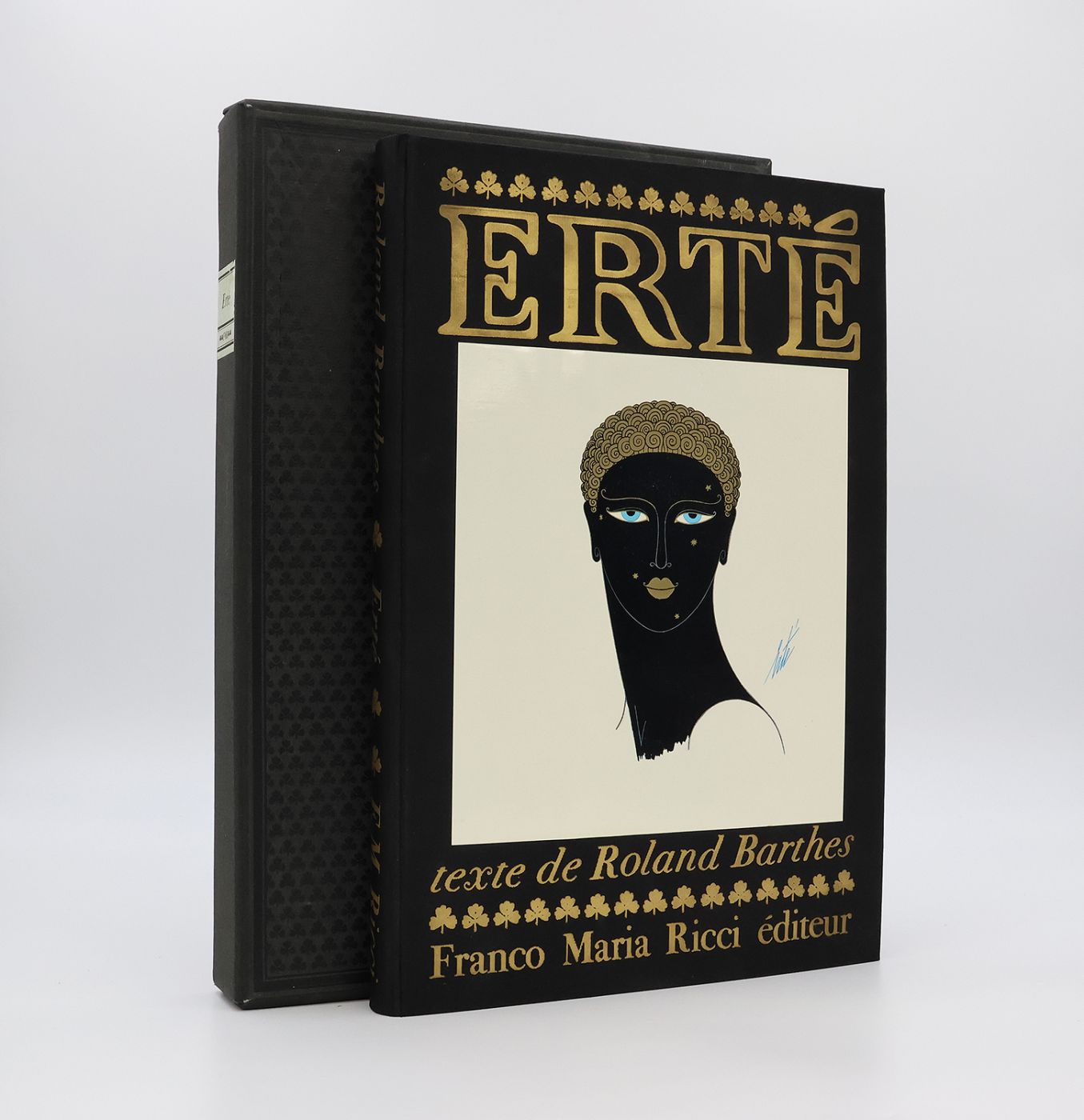
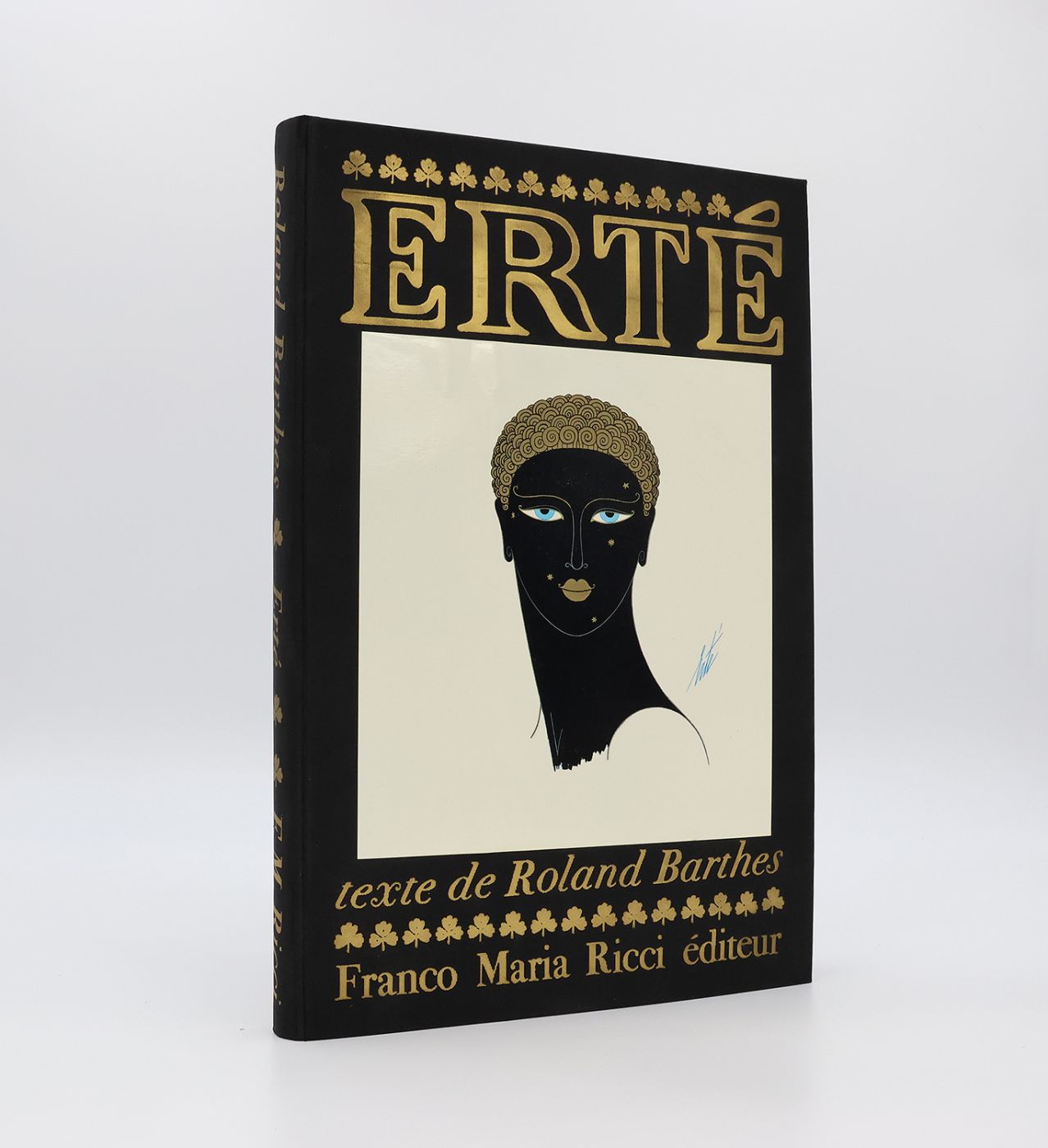
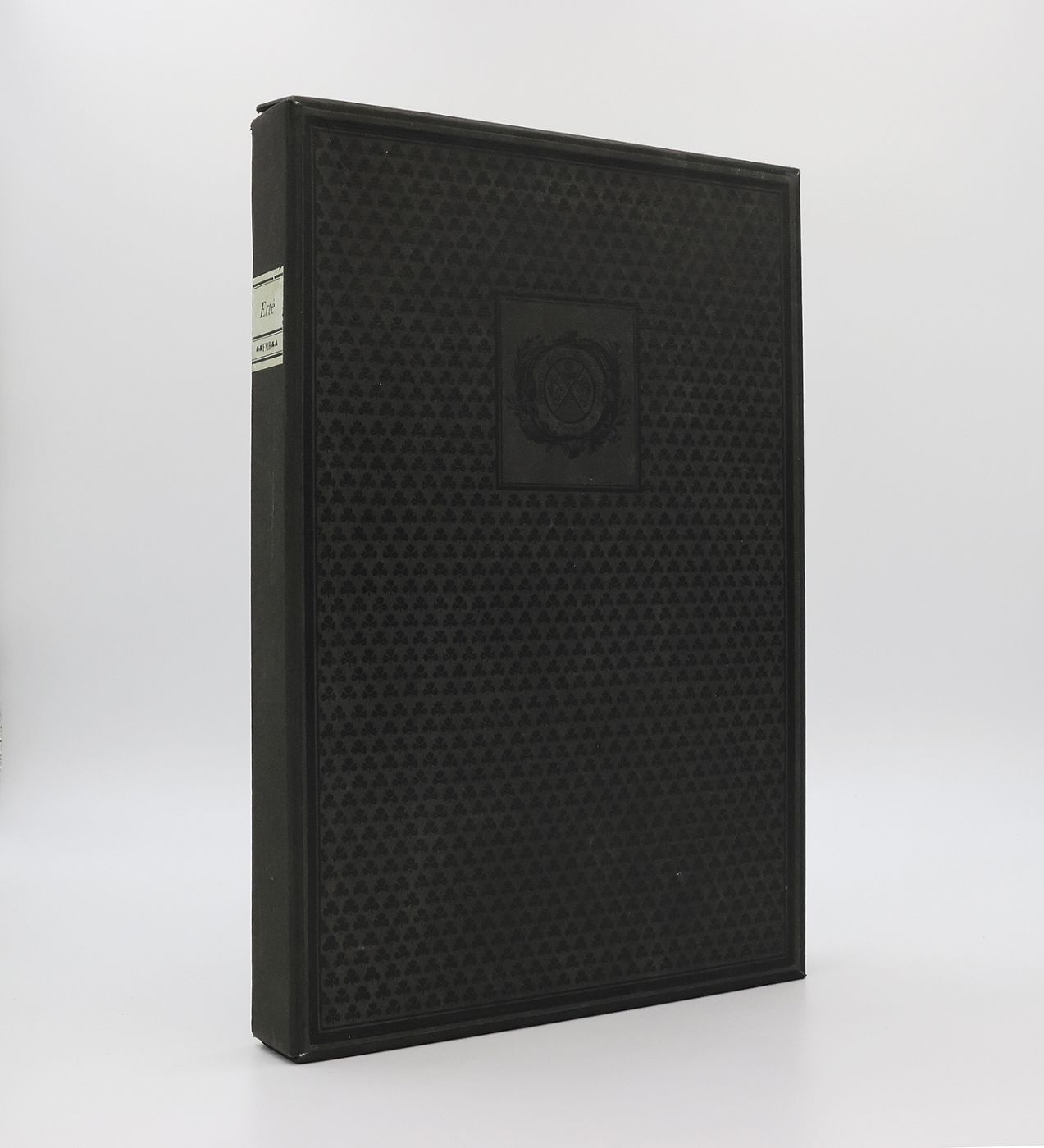
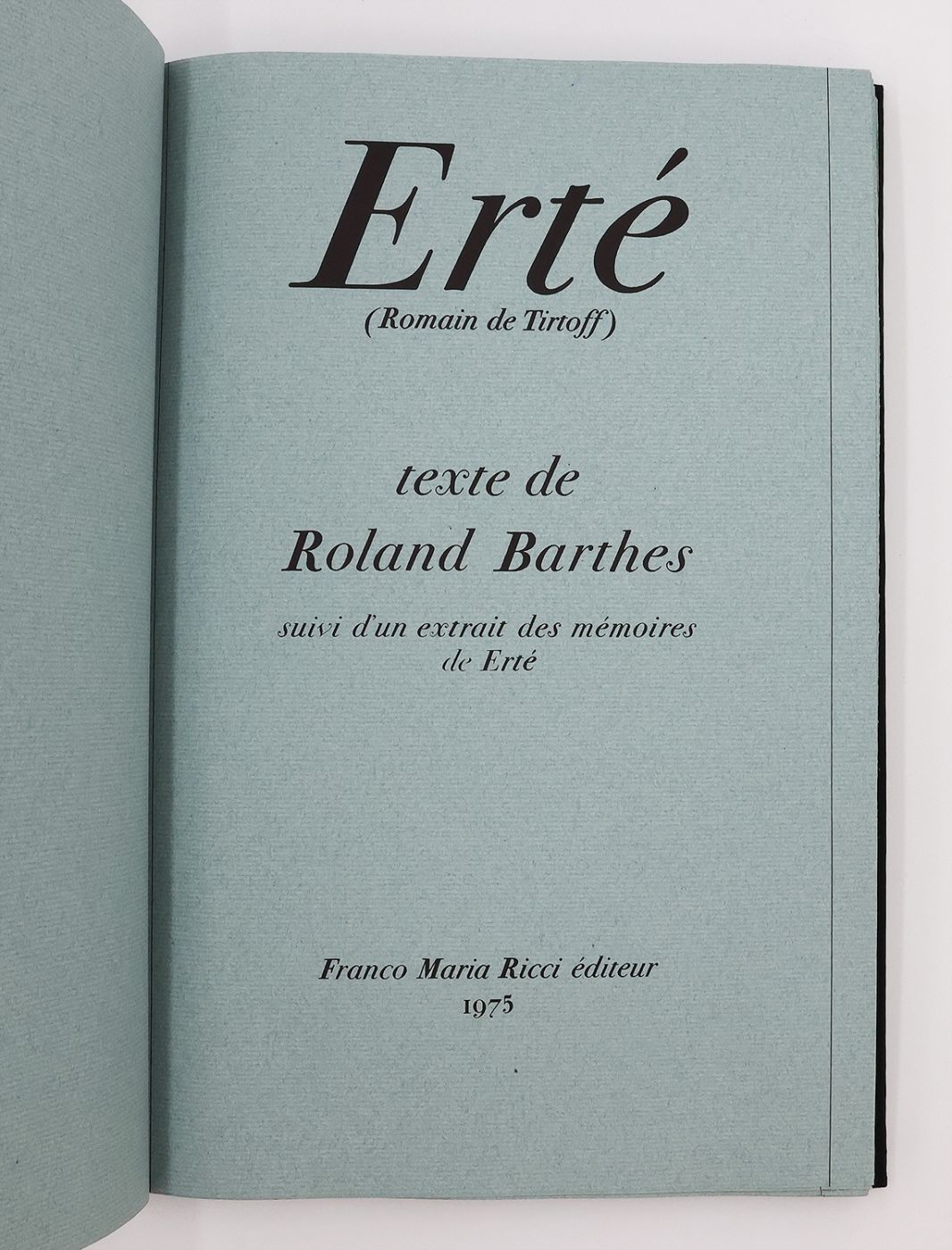
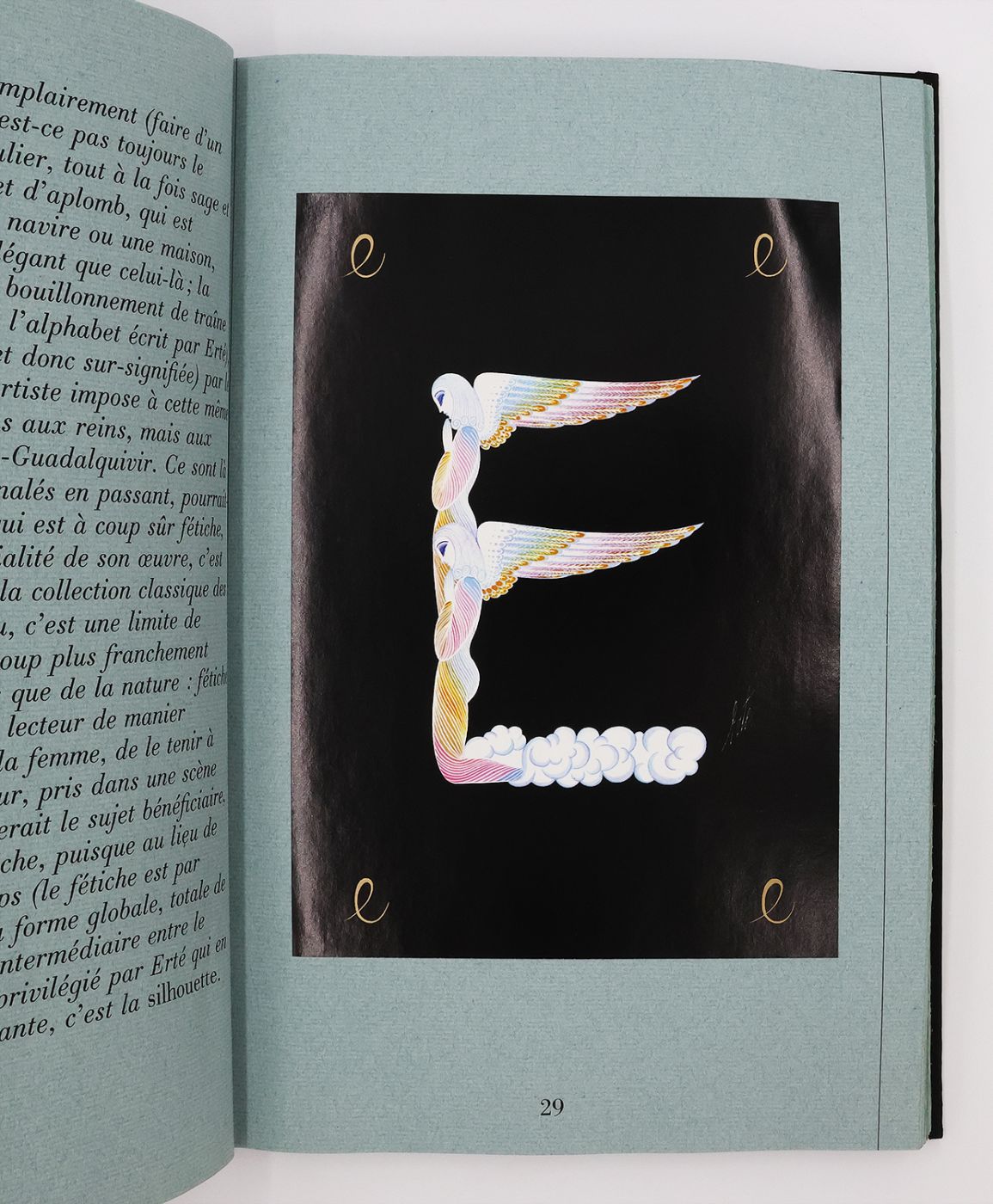
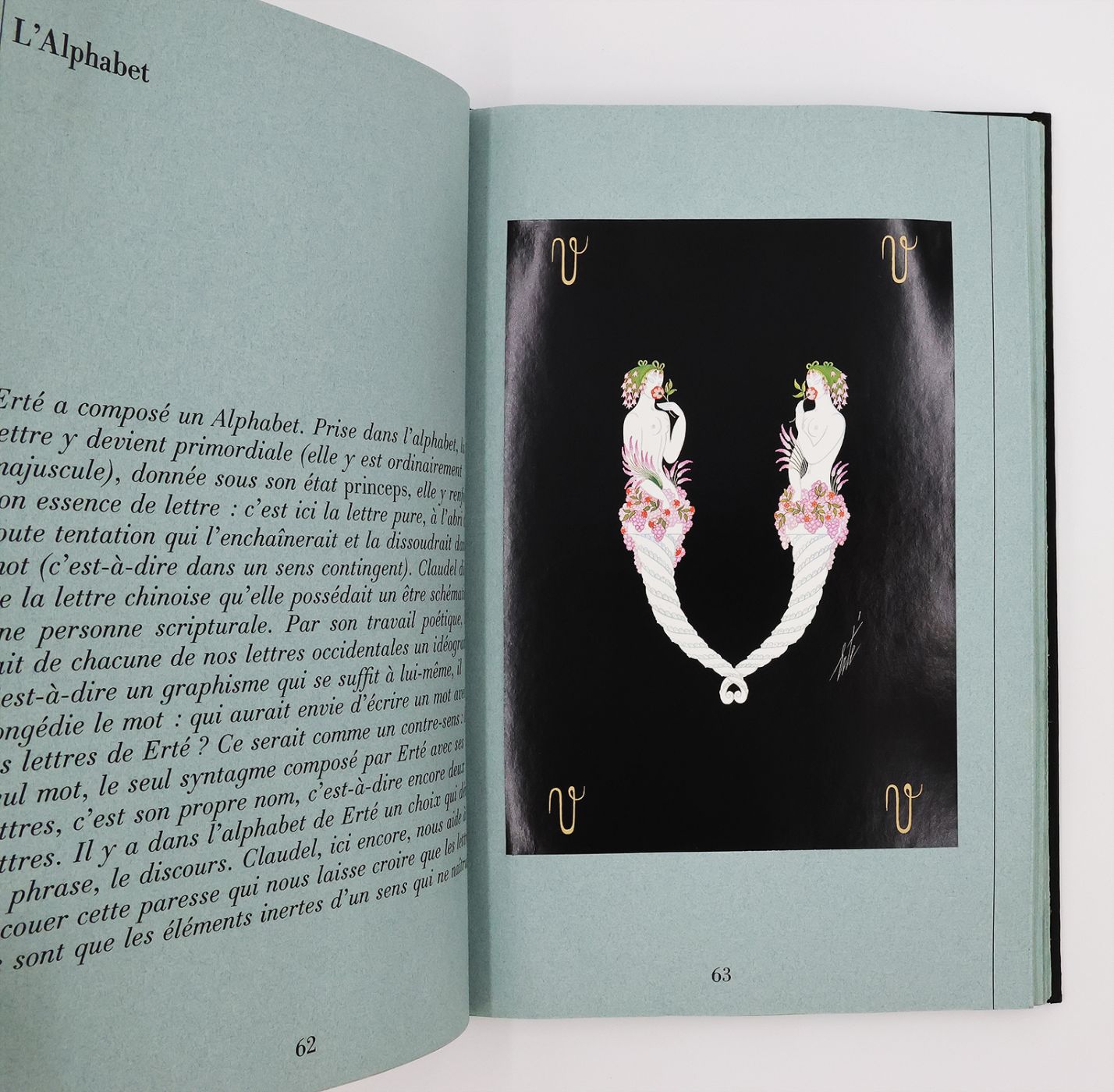
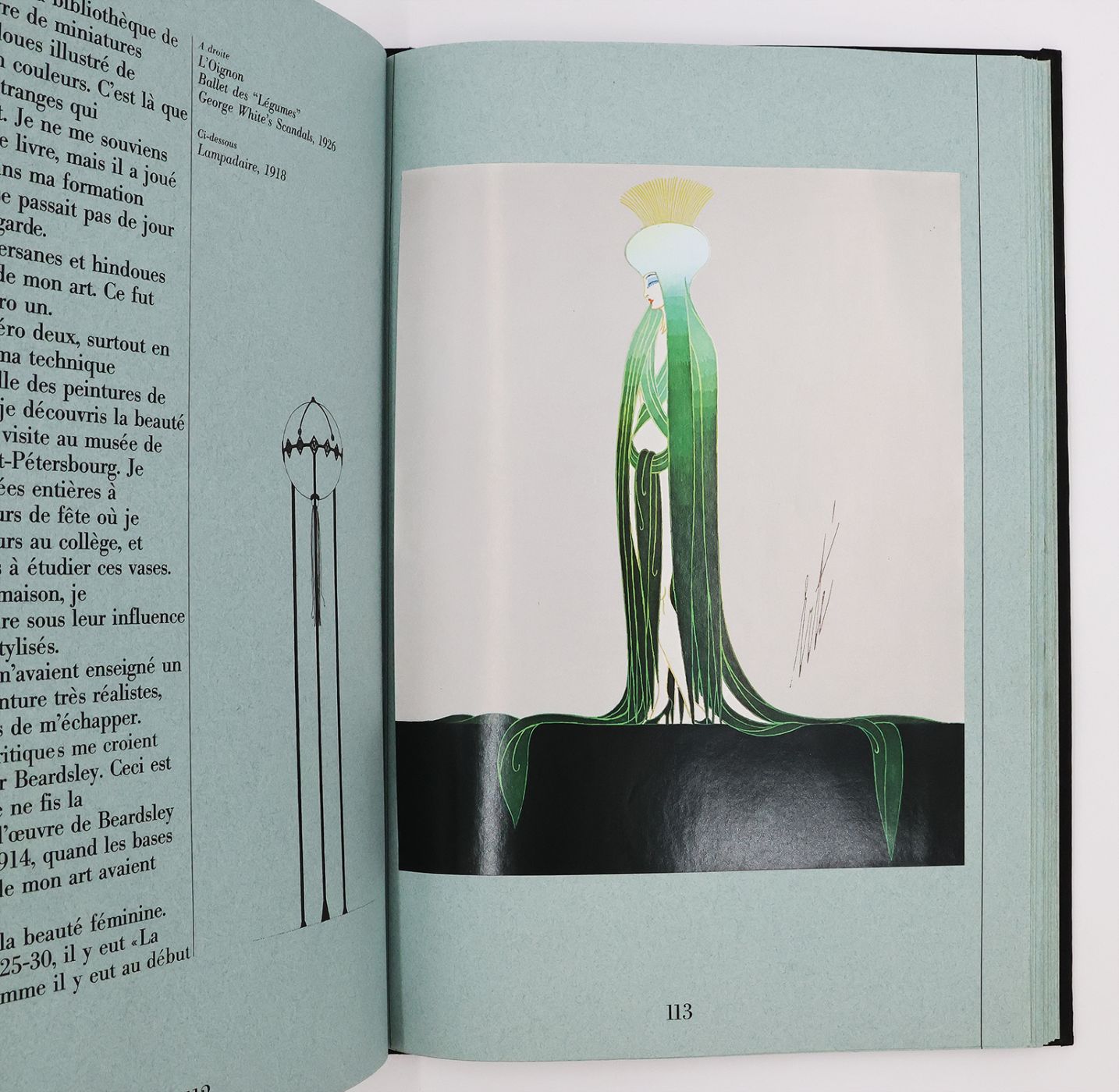
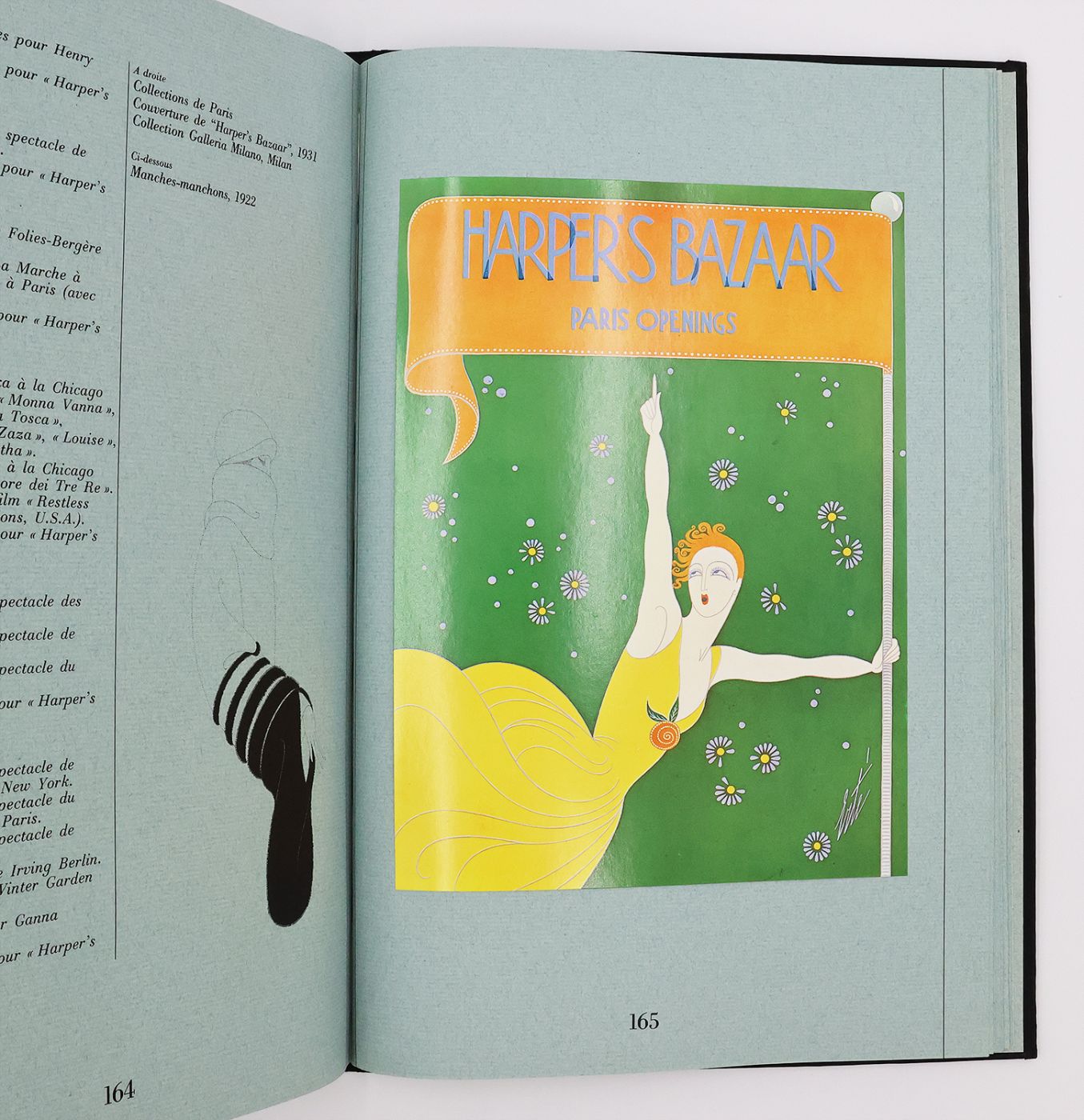
First French edition. Limited edition. Signed by the editor. Text in French. Publisher's original black silk with gilt titles and small parma violet illustrations to the upper board and spine, with a printed illustration by Erté to the upper board. Housed in the dark grey cloth folding case, with white card label with black titles and borders pasted to the backstrip. Patterned endpapers. Printed on handmade blue paper with the deckled fore-edge. Illustrated throughout with 78 tipped in colour plates by Erté, including a photograph of the artist himself, and 42 black and white line drawings of the artist's costume and prop designs. A near fine copy, the binding square and firm, the lower board very lightly spotted to the top edge and a little marked, with a touch of rubbing to the extremities. The contents are clean throughout, and without inscriptions or stamps. An attractive example.
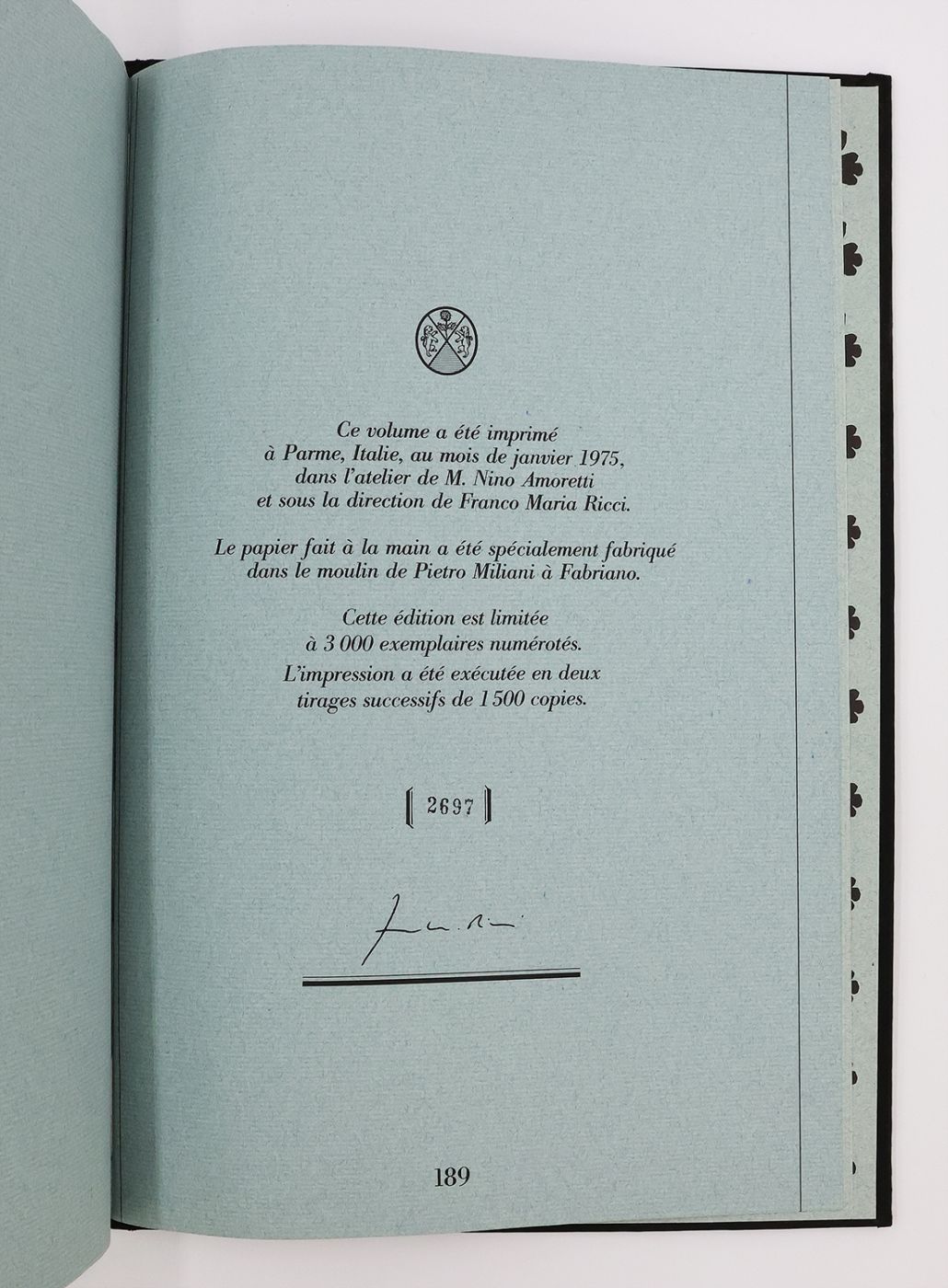
Issued in an edition of 3000 copies carried out in two successive print runs of 1500 copies, from which this example is numbered 2697, and signed by the editor Franco Maria Ricci in black ink on the colophon. A luxuriously-bound study of Russian-born French artist, fashion designer, and set designer Romain de Tirtoff (1892-1990), popularly known by the pseudonym Erté (from the French pronunciation of his initials). Richly illustrated throughout with a series of reproductions of the artist's works, this volume includes an accompanying essay by French critic and literary theorist Roland Barthes, followed by an extract from Erté's memoirs. The text was published in a series of six languages, Italian, English, French, Spanish, German, and Russian. Widely considered 'The Father of Art Deco', Erté's most famous art deco costume creations were worn by international stars of the stage and screen such as Marion Davies, Lillian Gish, and Irène Bordoni. Yet, Erté is particularly remembered for his artistic contributions to print media, having contributed over 200 covers for Harper's Bazaar fashion magazine in his signature art deco style, between 1915 and 1937. His work has since been described as a major factor in the magazine's rise in popularity, to the extent that the magazine's owner and publisher William Randolph Hearst is said to have once commented "what would Harper's Bazaar have been if it wasn't for Erté?" (Jon Astbury for Dezeen, 2025). The Alphabet and Numeral Suites, featured in this book, reportedly came from his childhood, with the artist explaining in an interview for The New York Times 'When I was learning to write, I thought of it as a kind of drawing. It amused me to make the letters in fancy ways, and I guess I came to think of the human body as a pliable part of a design in Maria Petitpa's ballet class' (Flora Lewis for The New York Times, 1976).
Stock code: 29435
£450
Published:
Category
Signed / InscribedNon-fiction
Art Books
Recent Acquisitions
Fashion